Men's Health: PSA Testing

Men's health has been highlighted in the news recently because in November 2025, the government released a new strategy for men’s health: Men’s health: a strategic vision for England
This strategy acknowledged that prostate cancer is the most common cancer in men with a higher incidence among Black men. The UK National Screening Committee is currently reviewing the evidence for prostate cancer screening programmes and launched a public consultation on 28th November.
A PSA test is a blood test that measures the amount of prostate-specific antigen (PSA), to check for conditions such as prostate cancer or an enlarged prostate. It is a test not routinely offered by the NHS unless a doctor thinks someone has symptoms of prostate cancer or if they are having regular treatment for a prostate condition. This is because there is a risk a PSA test result may not be accurate and may lead to further tests and treatment that are not needed.
Men over 50 can ask their GP for a PSA test through the NHS Prostate Cancer Risk Management Programme. Their GP will provide clear and balanced information on the potential benefits and risks of having the test. This test is available to anyone with a prostate, including trans women and non-binary people.
In Warwickshire, there are opportunities for individuals to arrange their own PSA test through a charity, The Graham Fulford Charitable Trust (GFCT). Results are shared with the individual to follow up with their GP. There is a charge for these tests, and they can be booked by anyone over the age of 40. In some areas these are subsidised by District or Borough Councils.
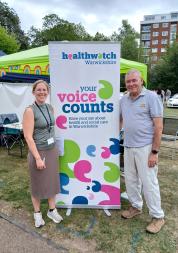
We spoke to men who attended the South Warwickshire prostate cancer support group and a charity-led PSA testing event in Henley on Arden to find out their experiences of PSA testing. We heard from men over 50, who should have been eligible for a PSA test under the NHS Prostate Cancer Risk Management Programme, but felt this was denied by their GP or were not aware of this option. We heard about the importance of raising awareness, in particular in the Black community
We have shared our findings with the Coventry and Warwickshire Integrated Care Board and their full response is included in the report.
"We welcome your report and recognise the issues that it raises, particularly in reaching out to men who are black or whose father or brother have been affected by prostate cancer. We look forward to working with Healthwatch in the future to continue to raise awareness to those most at risk."
Dr Imogen Staveley, Chief Medical Officer, NHS Coventry and Warwickshire Integrated Care Board.
In Warwickshire there are two support groups for those with prostate cancer.
- South Warwickshire Prostate Cancer support group
- Coventry & North Warwickshire Prostate Cancer Support Group (serving Coventry, Hinkley, Nuneaton and Rugby areas)